How the Host Agency Model Works for UK Travel Agents
If you're researching how to become a travel agent in the UK, you'll almost certainly come across the term "host agency." For many people, especially those new to the travel industry, the host agency model can feel unclear at first. Is it employment? Is it franchising? Do you need licences? And how does it actually work in practice? This guide explains how the host agency model works for UK travel agents, why it's the most common route into the industry, and what it means for anyone considering becoming a home-based travel agent.
What Is a Host Agency in the UK Travel Industry?
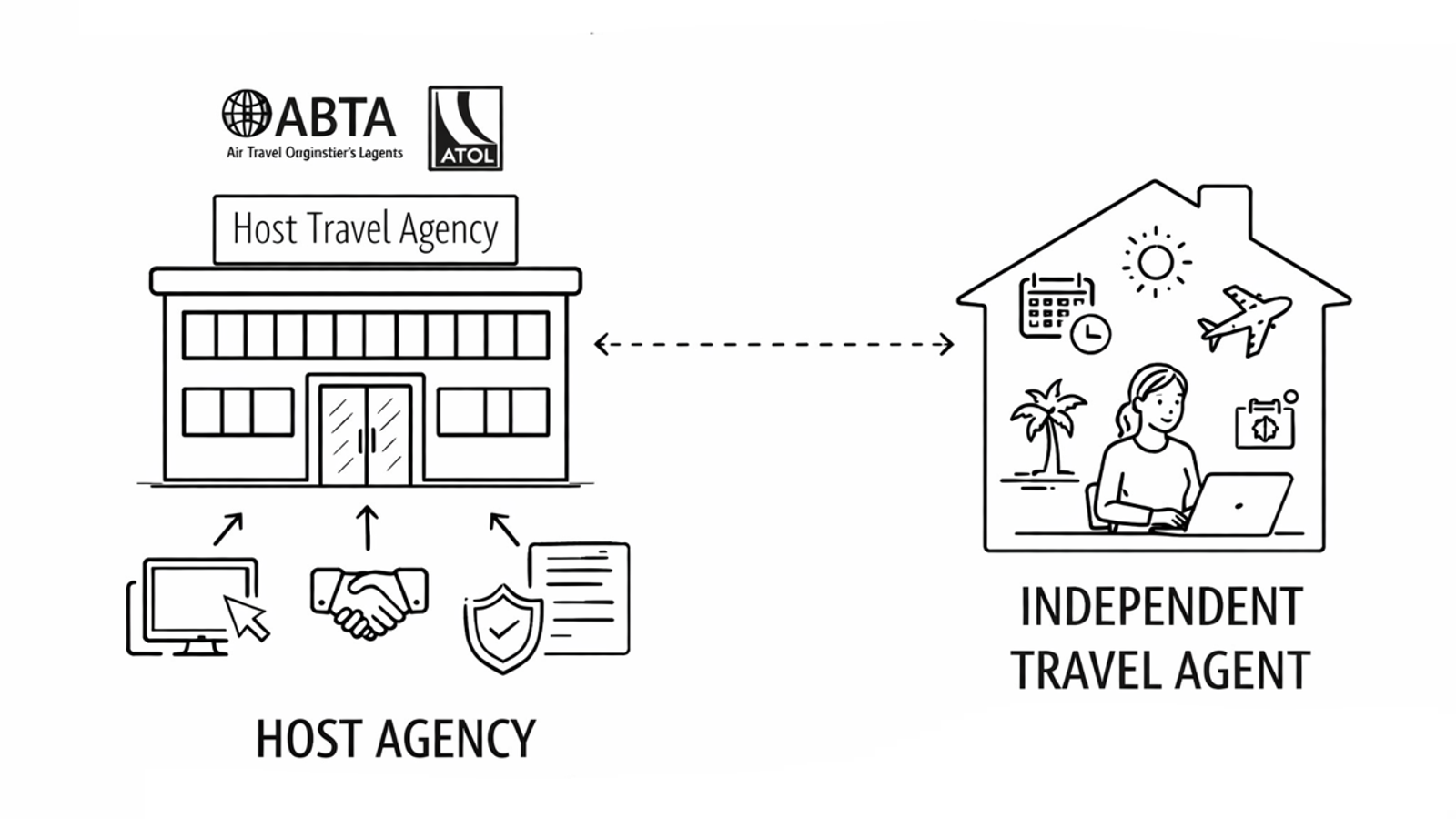
A host agency is an established, fully regulated travel business that provides independent travel agents with the infrastructure they need to operate professionally and compliantly.
Rather than setting up your own travel agency from scratch, you work under the umbrella of a host agency, using their systems, licences, supplier relationships, and protections.
In simple terms:
- • The host agency provides the framework
- • You run your own independent travel business within it
This model is widely used across the UK travel industry and is how most home-based travel agents operate.
Why the Host Agency Model Exists
Running a travel business in the UK involves regulation, financial protection, supplier contracts, booking systems, and compliance obligations.
Setting this up independently would require:
- • Significant upfront costs
- • Complex licensing and regulatory approval
- • Ongoing compliance management
- • Commercial agreements with multiple suppliers
The host agency model removes those barriers, making it possible for individuals to become travel agents without the cost, complexity, or risk of setting up alone.
What Does a Host Agency Provide to Travel Agents?
While details vary slightly between agencies, a reputable UK host agency typically provides:
Regulatory protection
- • ABTA membership
- • ATOL protection for flight-inclusive holidays
This ensures you operate compliantly under UK travel regulations from day one.
Booking systems and technology
- • Access to professional booking platforms
- • Supplier portals and tools
- • Secure payment and commission tracking systems
Supplier relationships
- • Established agreements with hotels, cruise lines, tour operators, and travel brands
- • Access to competitive rates and commission structures
Training and compliance support
- • Mandatory industry and compliance training
- • Ongoing education and updates
- • Clear guidance on selling holidays responsibly
Back-office support
- • Help with complex bookings
- • Supplier liaison where needed
- • Support with changes, cancellations, and queries
What Does Being 'Independent' Actually Mean?
One of the most common questions is whether working under a host agency means you're employed.
It doesn't.
As a home-based travel agent:
- • You are self-employed
- • You choose when and how you work
- • You decide how much time you commit
- • You build your own client relationships
The host agency does not manage your diary, set targets, or dictate how you run your business. Instead, they provide the professional structure that allows you to operate legitimately.
Do You Need Your Own ABTA or ATOL Licence?
No - and this is a key benefit of the host agency model.
How Do You Earn Money Under a Host Agency?
Independent travel agents earn income by:
- • Arranging and booking holidays for clients
- • Receiving commission from travel suppliers
Commission rates vary depending on the type of travel booked and the supplier, but this is the standard way travel agents earn income across the industry.
The host agency typically:
- • Receives commission from suppliers
- • Processes it through their systems
- • Pays the agreed share to you as the independent agent
This allows you to focus on clients, while the agency manages the administrative side.
Is the Host Agency Model Right for Everyone?
The host agency model works best for people who:
- • Want flexibility rather than fixed hours
- • Are comfortable building something gradually
- • Enjoy helping people plan holidays
- • Prefer support and structure rather than doing everything alone
It's particularly popular with people transitioning from other careers, returning to work, or looking for a flexible business alongside existing commitments.
Why This Model Appeals to People New to Travel
For those who haven't worked in travel before, the host agency model offers:
- • A lower-risk entry point
- • Proper training and guidance
- • Industry credibility from day one
- • Reassurance around compliance and protection
It allows people to learn as they go, without needing prior industry experience.
Final Thoughts
The host agency model is the foundation of how most home-based travel agents in the UK operate today.
It combines independence with support, flexibility with compliance, and entrepreneurship with professional structure. For many people exploring how to become a travel agent, it provides a realistic and sustainable way to get started.
Thinking about becoming a home-based travel agent?
If you'd like to learn more about how the host agency model works in practice, and what it could look like alongside your current life or career, get in touch and let's have a chat.
The key takeaways from this post
What is a host agency and how does it work?
A host agency is an established, fully regulated travel business that provides independent travel agents with the infrastructure they need to operate professionally. Rather than setting up your own travel agency from scratch, you work under the umbrella of a host agency, using their systems, licences, supplier relationships, and protections. You remain self-employed and independent, but benefit from their framework and support.
Am I employed by the host agency?
No, you are not employed by the host agency. As a home-based travel agent, you are self-employed. You choose when and how you work, decide how much time you commit, and build your own client relationships. The host agency provides the professional structure and regulatory framework, but does not manage your diary, set targets, or dictate how you run your business.